
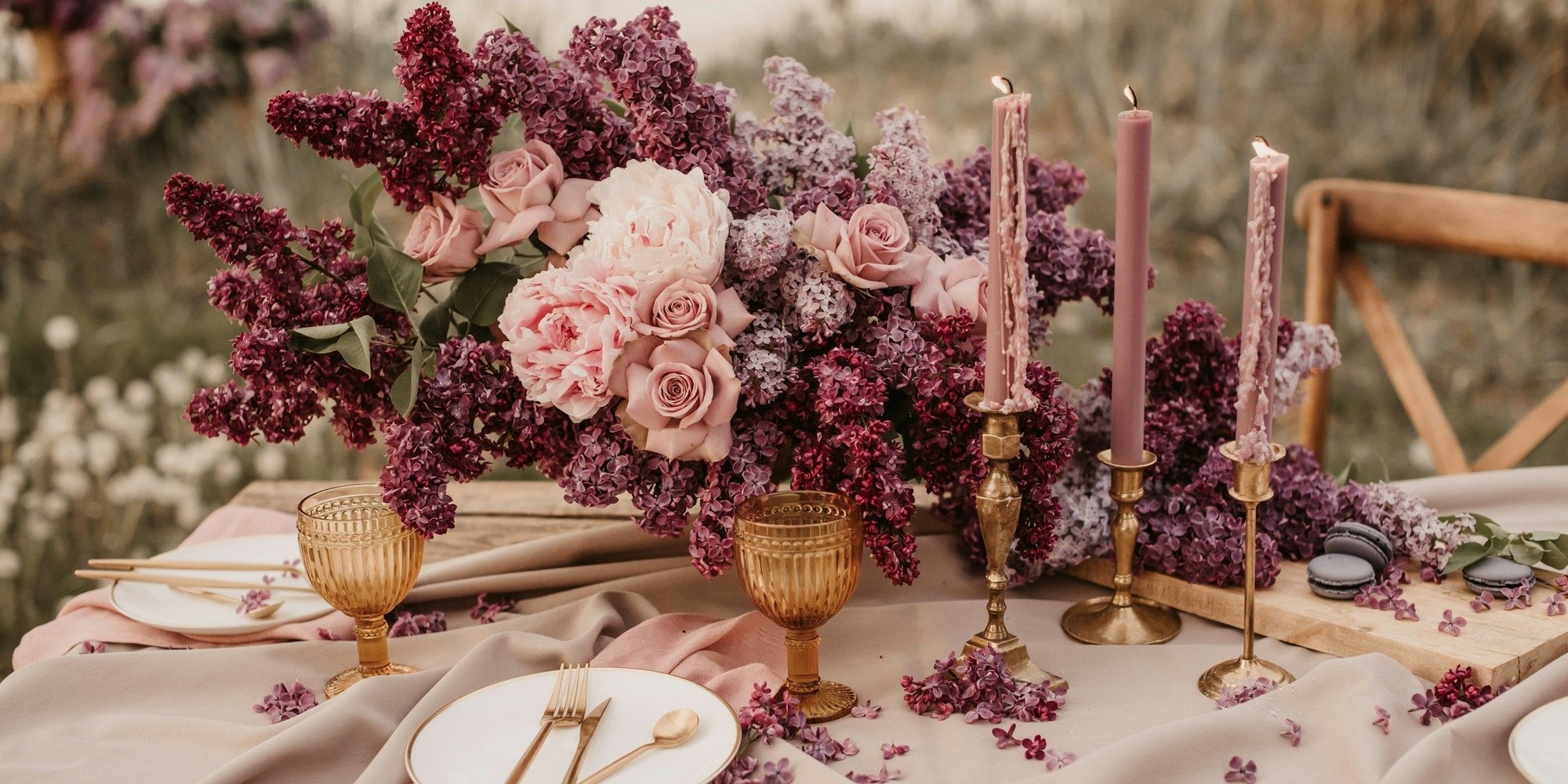
Florals are the most consistently underestimated line item in a wedding budget. Couples research venue costs carefully, get multiple quotes for photography, and compare catering proposals side by side. Then they see a floral proposal and feel surprised by the number — not because florists are overcharging, but because most couples don't understand what they're actually paying for.
A floral proposal is not a bill for flowers. It's a bill for flowers, design labor, mechanics, delivery, setup, on-site installation, breakdown, cold storage, and the risk management of working with perishable agricultural products on a fixed date that cannot move. The bridal bouquet you're admiring in someone else's wedding photos represents hours of sourcing, conditioning, and assembly — not just the cost of the blooms themselves.
Understanding this changes how you evaluate a florist. The question isn't whether the quote is expensive. It's whether the florist you're considering has the skill, the process, and the aesthetic vocabulary to make your specific vision real.
What Wedding Flowers Actually Cost
The range of wedding floral budgets is genuinely wide — wide enough that national averages obscure more than they reveal. WeddingWire reports couples spending an average of around $1,500, with most spending $700 to $2,500. The Knot's 2026 wedding flowers guide reports an average wedding flower cost of roughly $2,800. Zola's 2026 Wedding Cost Index places wedding flowers and floral design much higher, at roughly $6,300, with most actively planning couples spending between $5,100 and $7,600. The gap likely reflects different survey samples, category definitions, and wedding types captured — which is exactly why couples should treat national averages as context, not as a quote.
A common planning benchmark is roughly 8–10% of your total wedding budget for florals, though design-forward weddings often run higher. A couple spending $50,000 on their wedding should expect to allocate $4,000–$5,000 for flowers. If florals are a design priority — full ceremony installations, dense tablescapes, premium blooms — 12–15% may be more realistic. If flowers are a lower priority and you're focused on food, music, or photography, 6–8% is achievable without the result looking sparse.
What that percentage buys depends on where it goes.
Where the Budget Goes
A floral budget is not a single number — it's a collection of individual elements, each priced separately. Understanding the breakdown helps you make deliberate trade-offs rather than discovering them after you've signed a contract.
Personal flowers — bridal bouquet, bridesmaid bouquets, boutonnieres, corsages — can represent 20–30% of the floral budget, especially with a larger wedding party. The bridal bouquet alone often runs $250–$350 nationally, with premium or luxury designs reaching $500+. Bridesmaid bouquets average $75–$150 each. These numbers add up faster than couples expect when a wedding party of eight is involved.
Ceremony flowers — altar or arch arrangements, aisle markers, pew accents — often represent the largest single design opportunity in the budget. A freestanding ceremony arch with full floral coverage can run $1,500–$4,000+ depending on scale, flower variety, and whether it requires structural mechanics. Aisle markers and accent pieces add $500–$2,000 depending on quantity and design.
Reception flowers — centerpieces are typically the largest expense in this category. A single centerpiece runs $100–$500 depending on scale and flower selection. For 20 tables, that's $2,000–$10,000 in centerpieces alone before the head table, bar accents, cake flowers, and lounge arrangements are added.
Delivery, setup, and breakdown — florists charge for the labor of getting arrangements to your venue, installing them, and removing them afterward. This can run $300–$800+ depending on travel distance, venue complexity, and whether breakdown is included. This line item is often omitted from early conversations and surprises couples when it appears on the final invoice.
The practical advice: ask for an itemized proposal from every florist you consider. A proposal that gives you a single total number is not comparable to one that breaks out personal flowers, ceremony, reception, and logistics separately. You cannot make smart trade-offs without knowing what each element costs.
Why Flowers Cost What They Cost
Three factors drive floral pricing more than any other: flower selection, seasonality, and labor.
Flower selection. Premium blooms — peonies, garden roses, sweet peas, ranunculus, orchids, lisianthus — can cost several times more per stem than standard commercial flowers, especially when imported or out of season. When you're building a bouquet of 40–60 stems, the difference between choosing premium varieties and standard commercial flowers is substantial. Florists who design with premium blooms are not padding their margins — they're passing through real material costs.
Seasonality. Flowers that are out of season on your wedding date may need to be imported, which increases both cost and risk. Peonies are a spring bloom; requesting them for an October wedding means sourcing from growers in Chile or the southern hemisphere, with the associated freight cost and the risk that they arrive not quite right. A florist who knows their material will tell you what's genuinely in season for your date and offer alternatives that achieve a similar look at lower risk and lower cost.
Labor. The most underappreciated cost in floristry is time. A large ceremony arch requires hours of mechanical work before a single flower is placed. Reception centerpieces for 25 tables require assembly across multiple days of floral conditioning, mechanics preparation, and design work. The labor cost embedded in a floral proposal is not separately itemized in most quotes — it's built into the price of each arrangement. Asking a florist to "just do simpler versions" of complex designs often doesn't reduce cost as much as couples expect, because the labor-to-material ratio doesn't change proportionally.
The Questions That Reveal Whether a Florist Is Right for You
Most couples ask florists about availability, price, and whether they've worked at their venue. Those questions matter. But the answers that tell you whether a florist can actually execute your vision come from a different set of questions.
"Can I see full galleries from real weddings, not just styled shoots?" Styled shoots are controlled environments with unlimited time and a curated aesthetic. Real weddings have constraints — difficult load-in logistics, time pressure, weather, and the reality of executing a design across an eight-hour day. A florist who regularly shares work from real weddings is demonstrating confidence in their actual output, not just their best-case scenario.
"Tell me honestly what my budget will get me." The best florists answer this question directly and specifically: here's what we can do at this number, here's where we'd make trade-offs, here's where I'd spend if I were you. A florist who responds vaguely or tries to move you toward a higher number before explaining what the current budget achieves is not yet someone you can trust with the conversation.
"What's in season for my date, and what would you substitute if my preferred flowers aren't available or arrive in poor condition?" This question reveals two things: whether the florist has genuine material knowledge, and whether they have a contingency process. Fresh flowers are perishable and variable. A florist who has never thought about substitution plans is not one who has done enough weddings under real conditions.
"Who will be on-site on the wedding day?" Some florists send a crew; others are present themselves. Knowing who is responsible for installation and any on-the-day adjustments matters. If you're hiring a florist specifically for their aesthetic sensibility, confirm that the person with that sensibility is the one overseeing execution.
"What's your policy on substitutions if a specific flower becomes unavailable before the wedding?" Flower availability can shift between when a contract is signed and when an order is placed. A florist with a clear, transparent substitution policy — one who will contact you before making changes — is operating with integrity. A contract that gives the florist unlimited substitution discretion without notification is worth scrutinizing.
"What does your timeline look like between now and the wedding day?" Understanding the design process — when proposals are finalized, when orders are placed, when the florist wants a final count — tells you how organized they are and how much time you have to make changes.
Where to Spend and Where to Pull Back
Flowers appear in wedding photographs more than couples realize at the time. The ceremony backdrop, the bridal bouquet, the head table — these are the moments that show up in images repeatedly, from multiple angles, across hours of coverage.
The practical framework: spend where cameras are, simplify where they aren't.
A ceremony arch that appears in every ceremony photo is worth the investment. Aisle markers that appear in three shots are a reasonable place to pull back. Reception centerpieces on every table cost the same whether they're photographed or not — if photography is a priority, consider putting more budget into a dramatic head table or sweetheart table and using simpler bud vases or greenery arrangements on guest tables.
Repurposing is one of the most underutilized strategies in floral budgeting. Ceremony arch panels that can be moved to flank the sweetheart table, bridesmaid bouquets that become bud vase arrangements at the cocktail hour — a florist who thinks about your flowers across the full arc of the day will give you more value from the same budget than one who designs each element in isolation.
How to Actually Compare Florist Quotes
Floral quotes are notoriously difficult to compare because they're rarely structured the same way. One quote might include delivery and breakdown; another might not. One might itemize every arrangement; another might give a total number for "reception flowers." Before you compare prices, confirm that the quotes cover the same scope.
A few things to verify across every proposal:
- Does delivery, setup, and breakdown have a separate line item, or is it bundled?
- Is the quote based on your current guest count and table count, or an estimate?
- Does it include vase and mechanics rental, or will those be charged separately?
- Is there a minimum budget the florist requires?
- What is the payment schedule and cancellation policy?
The florist whose quote is 20% higher may be including line items the lower quote has omitted. The florist whose quote is 20% lower may be designing at a scale that doesn't match the images in their portfolio. The only way to know is to ask.
How Vera Monet Thinks About Florals
Florals are one of the categories where the gap between what you see on Instagram and what you receive can be especially wide. An arch that looks effortless in a portfolio took four hours to build and two hours to remove. A tablescape that appears simple is often the result of highly skilled restraint.
We look at florists' real-wedding work, not just their best images. We want to see how they work across different venues, different light conditions, and different aesthetic directions — not just how they perform on a styled shoot designed to showcase one look. When we make introductions, we match based on the specific aesthetic language you're working in and the florist's demonstrated ability to execute it at your scale and budget.
Browse florists in your market →
Sources: Zola Wedding Cost Index (2026) · WeddingWire: Wedding Flowers Cost Guide · The Knot: Average Cost of Wedding Flowers (2026) · The Knot: Questions to Ask a Wedding Florist · Fiore Designs: Questions for Wedding Florists (2026) · Peerspace: Questions for Wedding Florists (2026) · Aster and Bee Floral: Average Cost of Wedding Flowers (2026)