
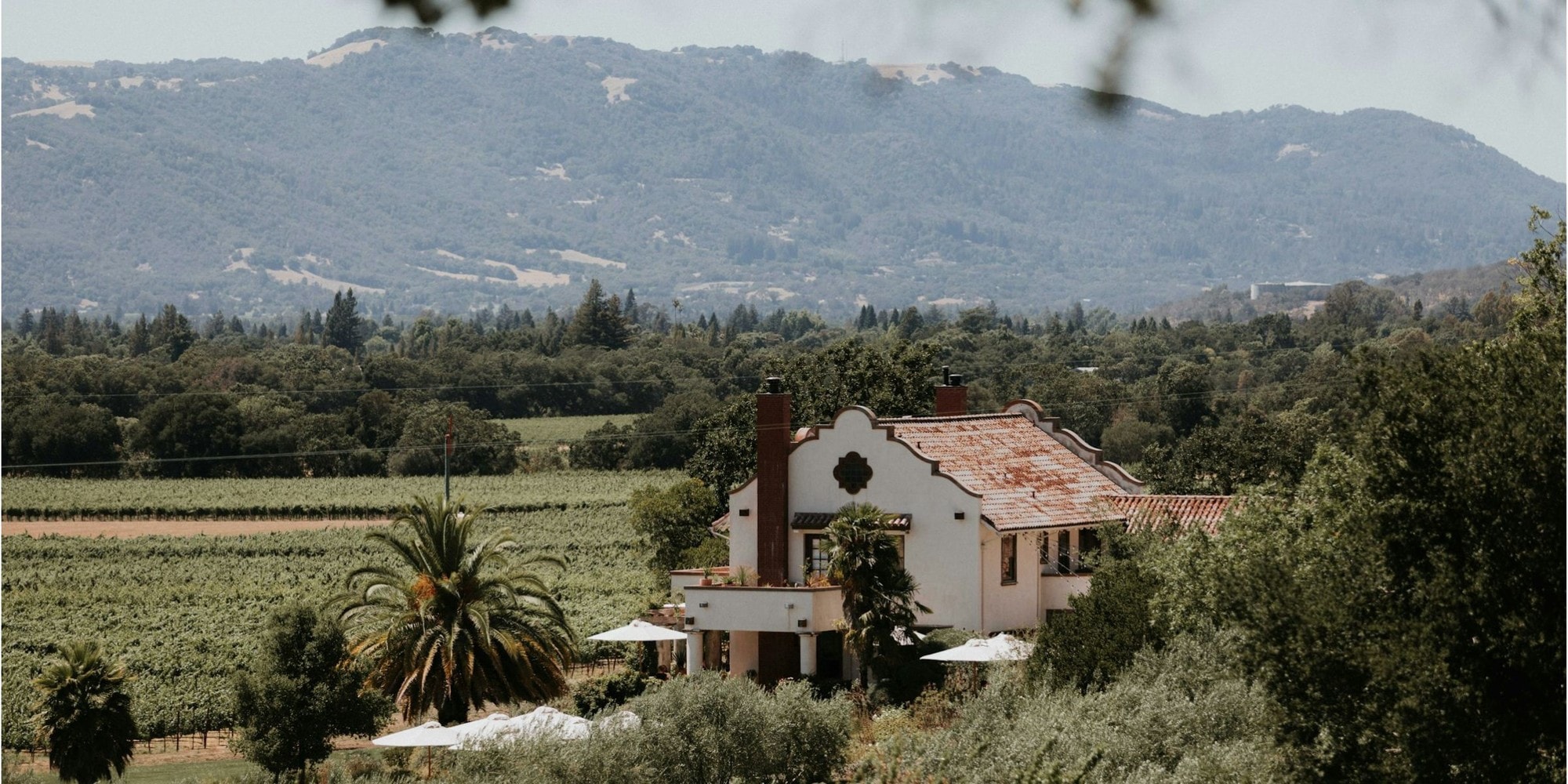
A 100-guest Napa Valley wedding in 2026 realistically runs $55,000 to $110,000, with most full-service, professionally staffed, peak-season weddings landing between $70,000 and $110,000. Luxury resort weddings and multi-day wine-country celebrations can move well beyond that — some premium properties require six-figure minimums or full buyouts.
Napa prices well above the national average not because every wedding is extravagant, but because legal wedding venues are scarce, destination guest logistics are complex, floral and design expectations are high, and the May-through-October calendar compresses demand into a narrow band of desirable dates.
What a Napa Wedding Costs in 2026
Napa Valley is a destination market in the truest sense — many couples who marry here travel in, and bring a destination guest list with them. That creates steady demand and keeps vendor pricing well above national norms. The national average wedding sits around $34,200 in The Knot’s 2026 Real Weddings Study. The Wedding Report’s 2025–2026 estimates put the average Napa wedding near $53,000 — and that figure understates what a professionally staffed, peak-season celebration actually costs.
For 100 guests: most couples spend between $55,000 and $110,000 total, with most full-service, professionally staffed weddings landing between $70,000 and $110,000 for a Saturday in peak season. In full-service Napa weddings, each additional guest can add several hundred dollars once food, beverage, rentals, service, transportation, and guest-facing details are included.
For 75 guests or fewer: a carefully managed budget can often land between $40,000 and $70,000 — but only if venue, catering, and the vendor calendar align. Napa’s fixed venue fees and high floral and catering minimums mean the ceiling doesn’t shrink proportionally with the guest list.
At the luxury tier: relaxed-luxury and full-resort weddings for 100 guests can reach $120,000–$155,000+, while full buyouts at the highest-end properties — such as Auberge du Soleil — can move well beyond that.
The Napa Budget Breakdown
For most couples planning a 100-guest Saturday wedding in Napa Valley:
| Category | Realistic Range |
|---|---|
| Venue site fee | $12,000–$30,000 (many around $15,000; effective cost higher at resorts and buyouts) |
| Catering + bar | $20,000–$45,000 (before tax, service charge, and gratuity) |
| Photography | $4,000–$12,000 |
| Videography | $3,500–$8,000 |
| Florals + decor | $8,000–$30,000+ (luxury full-service often $20,000–$45,000) |
| Planner | $6,000–$15,000+ |
| Entertainment (DJ or band) | $2,500–$12,000 |
| Hair + makeup | $1,200–$3,000 |
| Lodging, transport + all other (attire, cake, stationery, welcome events) | $6,000–$15,000 |
| Total | $55,000–$155,000+ (resort buyouts can exceed this) |
The lower end requires meaningful trade-offs: a shorter guest list, an off-peak date, a venue with catering and rentals included, and restrained florals. The upper end reflects full-service planning, a live band, installation-level florals, and a private estate or resort on a Saturday in October. Most full-service, professionally staffed Napa weddings for 100 guests land between $70,000 and $110,000.
The Venue Market
Napa’s venue landscape is unlike anywhere else in the country — and the single most important thing to understand before you fall in love with a vineyard is that most working wineries cannot legally host weddings.
Under Napa County’s Winery Definition Ordinance (WDO), enacted in 1989 to protect agricultural land, wineries are generally prohibited from hosting weddings and similar events not directly tied to wine marketing. Only a small number of wineries were “grandfathered in” and may host weddings — commonly cited examples include Charles Krug, V. Sattui, Merryvale, and Beringer, in and around St. Helena. Treat that as illustrative rather than a complete legal list: permissions vary by property, permit, and event type, so confirm a venue’s wedding rights directly. As a result, the vast majority of “wine country” weddings actually take place at dedicated event estates, private vineyard properties, and resorts that are licensed for events — not at the working wineries couples often picture.
That scarcity is the engine behind Napa’s venue pricing. Planner and market guidance puts site fees commonly at $12,000–$30,000, with many landing around $15,000 for the space alone — frequently before tables, chairs, linens, or catering. Many venues don’t include catering, bar, rentals, or staffing in the site fee, so the headline number rarely reflects the real total.
A few Napa-specific realities worth knowing before you sign:
Approved-vendor and licensed-caterer requirements. Many estates require you to choose from an approved caterer list and to use licensed, insured professionals — which narrows your options in every other category and can raise costs.
Minimum spends and buyouts. Premium estates and resorts frequently carry food-and-beverage minimums or full-buyout requirements that set a floor well above the published site fee.
Land-use and permit limits. County land-use rules cap event activity on agricultural parcels, which is part of why legal venues are limited and book so far ahead.
Photography
Napa attracts a deep bench of editorial, film, and fine-art photographers drawn by the light, the vineyards, and the destination clientele — and pricing reflects it.
Experienced mid-range photographers in Napa typically charge $4,000–$7,000 for full-day coverage with a second shooter and engagement session. Established luxury, film, and destination photographers generally begin at $7,000 and run to $12,000+, depending on coverage, film or digital approach, and multi-day scope. Newer professionals offering simpler 6–8 hour coverage may fall in the $2,500–$4,000 range.
A few things worth knowing:
- Golden-hour vineyard light is Napa’s signature — photographers who shoot well in harsh midday sun and warm low-angle evening light earn their rates here.
- Albums, engagement sessions, and second shooters are frequently priced separately.
- The best Napa photographers fill September and October Saturdays first. If photography matters to you, book it before — or alongside — the venue, not after.
Catering
Catering is where Napa’s wine-country identity shows up most directly on the invoice. Farm-to-table menus, multi-course plated service, and serious wine programs are the expectation, not the upgrade.
Premium wine-country catering guidance puts plated dinner service in Napa commonly at $100–$250 per person for food alone, with base quotes often near $175 per person once service and kitchen equipment are included. Premium wine-country weddings can move into the several-hundred-dollar-per-person range once bar, rentals, service, staffing, and fees are included. For 100 guests, realistic catering-and-bar spend lands in the $20,000–$45,000 range before tax, service charge, and gratuity — and many caterers and venues add a service charge of often around 20–24% on top.
Wine, naturally, deserves its own line. In a region defined by it, couples often invest more in the beverage program than they would elsewhere — and corkage, sommelier service, and curated local pours can move the number meaningfully.
Wedding Planning
Full-service planning in Napa typically runs $6,000–$15,000+, with luxury and destination-scale planners often exceeding that depending on scope, guest logistics, and design involvement — a reflection of coordinating a destination wedding where vendors book far ahead and logistics span multiple properties and lodging sites. Some full-service Napa planners price as a percentage of total budget (commonly 10–18%).
Month-of coordination starts in the low thousands. Partial planning — for couples who’ve locked the venue and a few key vendors but want professional support for the rest — sits in the middle. Full-service planning, from the first venue call through final payments and guest logistics, commands the top of the range.
In Napa, a good planner earns the fee in ways that aren’t visible on paper: knowing which of the limited legal venues have real availability, navigating approved-vendor lists and county permitting, and building transportation and lodging logistics that a do-it-yourself plan almost always underestimates.
Florals and Decor
Florals are the category that most often surprises couples in Napa — and the one that diverges most sharply from other markets. The wine-country setting creates an expectation of lush, abundant, garden-forward design, and pricing follows.
Many full-service Napa and Bay Area floral designers begin around five figures, and a designed 100-guest wedding often runs $8,000–$30,000+. Luxury full-service florals for 2026–2027 weddings frequently fall between $20,000 and $45,000, with installation-heavy and multi-day celebrations exceeding that. Individual bridal bouquets generally run $250–$400+.
The Napa-specific note: the landscape does real work for you. A florist who designs with the vineyard, olive groves, and natural light — rather than importing a maximalist look that competes with the setting — will often deliver a more beautiful result at a lower cost than one who treats the venue as a blank canvas.
What Makes Napa Cost More
Several Napa-specific factors push budgets above what couples expect when they arrive with a national-average number in mind.
A scarcity of legal venues. The Winery Definition Ordinance and county land-use rules sharply limit where weddings can legally happen. Fewer venues chasing year-round destination demand keeps pricing firm and calendars tight.
Destination demand. Many couples and guests travel in, and vendors price knowing their clients have chosen Napa over every other market — demand that doesn’t redirect easily to a cheaper city.
Floral and design expectations. Wine-country aesthetics set a high baseline; five-figure floral budgets are common rather than guaranteed.
Lodging and transportation. Napa hotel inventory is limited and expensive, and a wine-region wedding all but requires guest shuttles — both for distance and because no one should drive after a day in the valley. Welcome dinners and multi-day programming are common and add cost.
Peak-season compression. May through October — and especially the September–October harvest window — concentrates demand into a narrow band of dates. Top venues and vendors commonly book 12–18 months out.
Wildfire-season contingency. Dates from late summer into fall carry real wildfire and air-quality risk that inland markets don’t. Event cancellation insurance — commonly $150–$600 depending on coverage — is worth serious consideration for any date in that window; confirm smoke, evacuation, venue-closure, and wildfire exclusions before buying, and pair it with a heat or smoke contingency plan.
When to Book What
For peak Saturdays, plan on booking 14–18 months out:
- Saturday venue at a sought-after estate or resort (especially September and October)
- Photographer with a specific editorial or film style
- Full-service planner
- Live band (top Napa bands have tight Saturday availability)
Book 10–14 months out:
- Florist, especially for installation-heavy designs
- Videographer
- Caterer, if not venue-provided
- Room blocks and guest lodging (Napa inventory fills early)
Book 6–10 months out:
- Hair and makeup team
- Officiant
- Guest transportation and shuttles
Book 3–6 months out:
- Cake and desserts
- Stationery
- Day-of rentals (linens, chargers, specialty items)
The mistake most couples make is treating photographer and planner as afterthoughts once the venue is locked. In a market with this few venues and this much destination demand, the best planners and photographers are typically gone by the time couples circle back. If you have strong preferences there, move them earlier.
The Season Question
September and October are Napa’s most coveted — and most expensive — months. Harvest turns the vines gold, the weather is reliably beautiful, and demand peaks. Expect top pricing, maximum competition for dates, and venues booked a year or more out. This window also overlaps wildfire season, so build in insurance and a contingency plan.
May, June, and early summer are fully peak as well — long days, green vineyards, and warm but generally comfortable conditions. July and August bring real inland heat, which makes shade, timing, and climate-controlled spaces essential for midday events.
April and November are Napa’s shoulder months — milder demand, somewhat more availability, and a setting that still photographs beautifully, with a bit more negotiating room.
December through March is the most accessible window. Vendor availability is highest and pricing most negotiable; the trade-offs are cooler temperatures and winter rain. An intimate off-season vineyard or estate wedding can be genuinely beautiful — and meaningfully less expensive than the same wedding in October.
A Note on How We Think About Vendors
Finding the right photographer, florist, or planner in Napa isn’t hard because good vendors are scarce. It’s hard because the venues are limited, the best vendors book early, and the platforms that claim to surface the best ones are mostly sorting by advertising spend.
Vera Monet works differently. We review vendor portfolios, build relationships with the people behind them, and make introductions based on fit — not availability, not sponsorship. When you’re ready to begin, we introduce you to three vendors in each category.
Sources: The Knot 2026 Real Weddings Study · The Wedding Report (Napa, CA estimates, 2025–2026) · With Joy: Napa Valley Wedding Cost — Real Numbers (2025) · Tumbleweed Floral Design: Luxury Wedding Florals in Napa Valley (2026–2027) · Lovely Day Events: Napa/Sonoma wedding cost guidance · Visit Napa Valley Wedding FAQs · Inside Napa Valley: Land-Use Rules Limit Weddings in Wine Country (Winery Definition Ordinance) · V. Sattui Napa Wedding Planning Guide · Resort pricing positioning via third-party venue pages (PartySlate / Breezit, directional only) · Wedding insurance cost guidance: Zola (2026)